
Hello! I’m Anna, a master’s student in the BTF research group. I’m currently writing my master’s thesis as part of the NatuRA project, which has established an experiment at 2000, 2500 and 3000 m above sea level in the Maloti-Drakensberg Mountains in South Africa.
In January, during Norway’s shortest and coldest days, me and two of my supervisors headed for fieldwork in South Africa, where summer was at its peak. We spent the first few days at the University of Pretoria, preparing the last bits for fieldwork and meeting some of our collaborators. Early the first morning, before heading to the university, Peter le Roux (professor at the University of Pretoria) took us on a short car ride to a viewpoint of Pretoria. Very soon, however, we found ourselves stuck in traffic.. ZEBRA traffic. A pretty unforgettable way to start a fieldwork campaign.
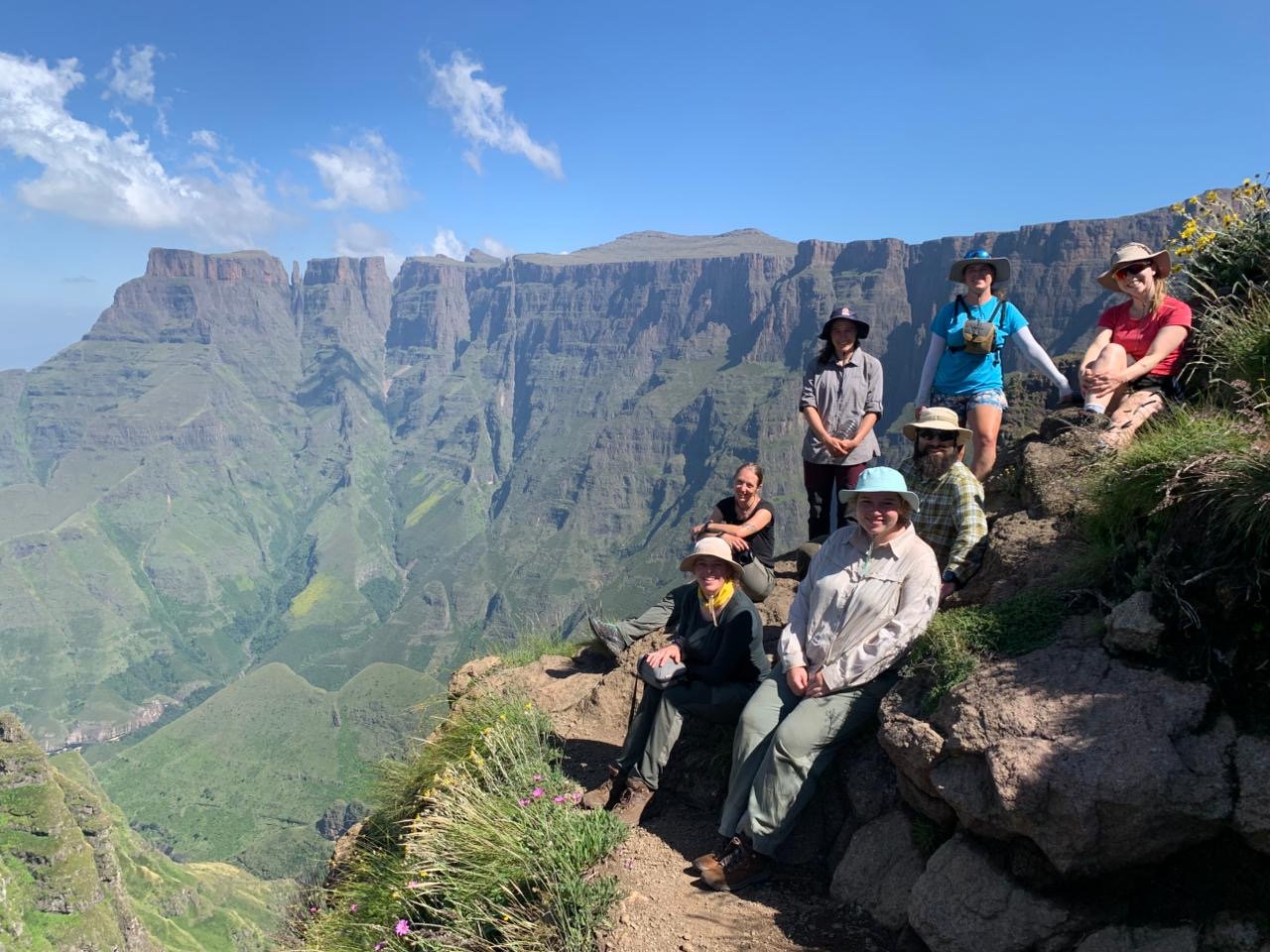
A few days later, in foggy weather, we arrived at the nice and quiet mountain lodge of Witsieshoek. Only on the third day did the fog finally lift, revealing the dramatic landscape around us. With long field days ahead, we usually started at sunrise, to make the most of the daylight.
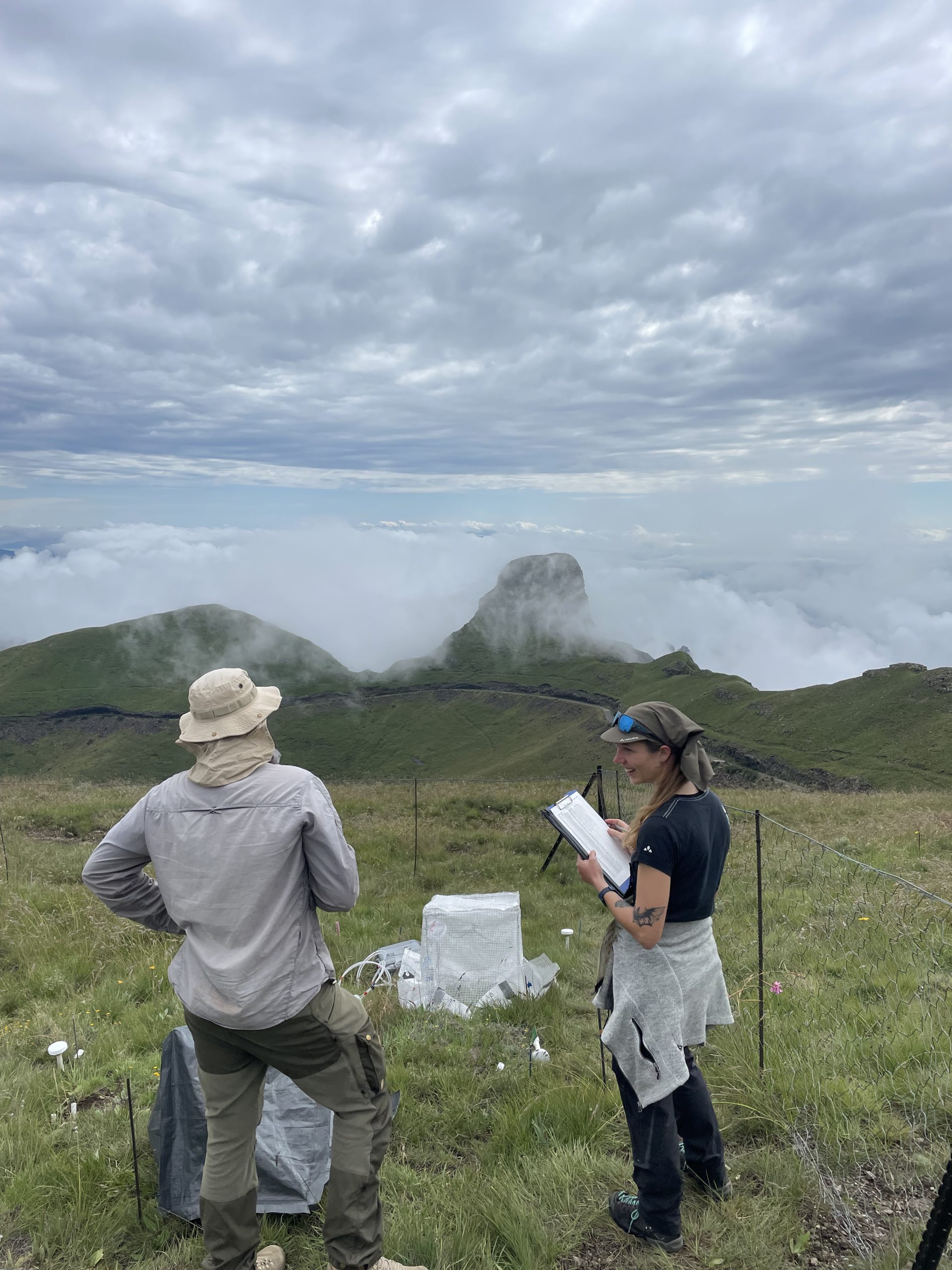
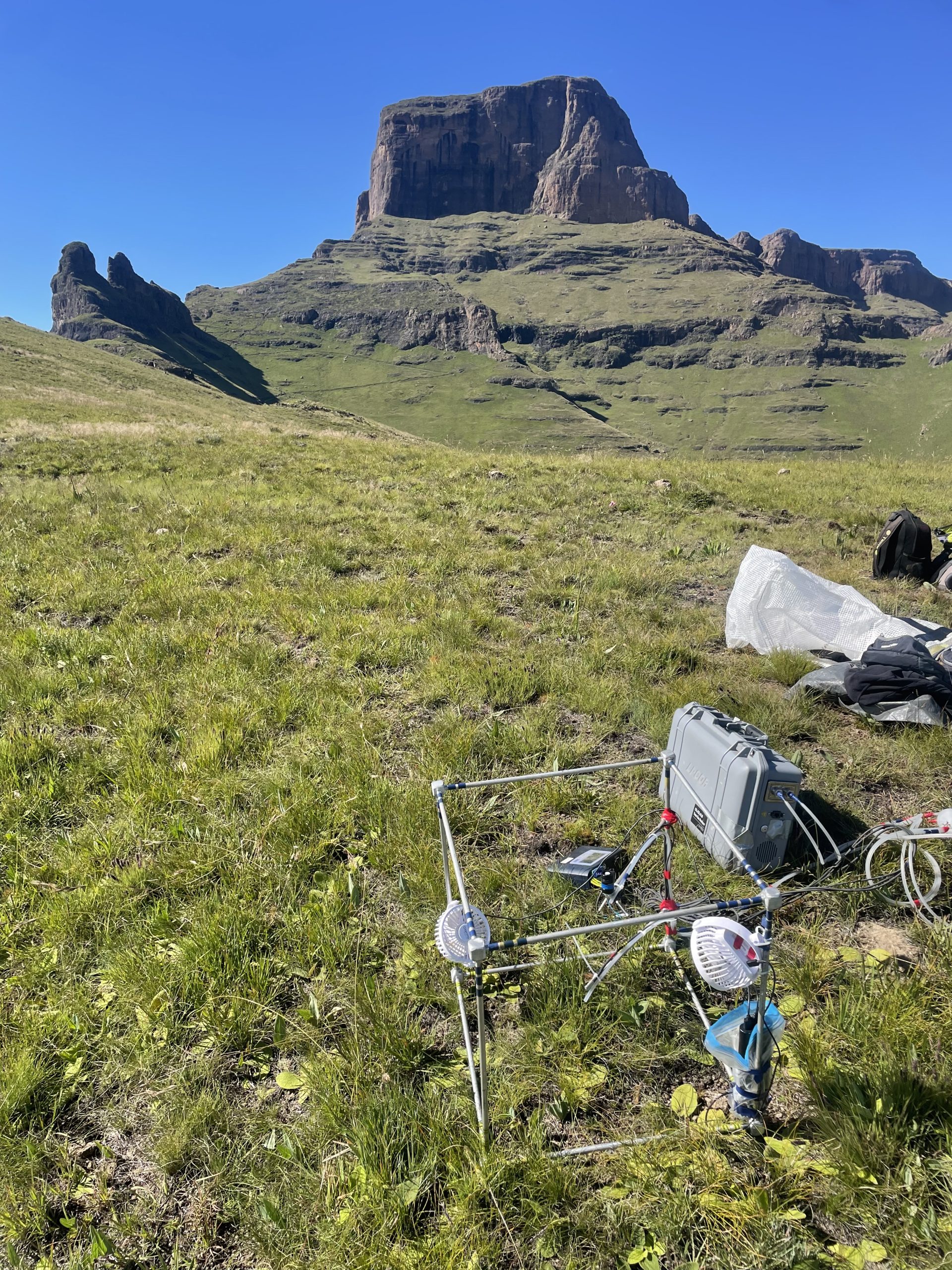
For my master thesis, I’m studying how global change drivers (climate warming, nitrogen deposition and grazing) affect carbon dynamics in the Drakensberg Mountains. We measured ecosystem carbon fluxes by using our homemade chamber: a tent-like structure that we sealed to the plot with a chain while a gas analyzer, thermometers, and a light sensor measured how carbon dioxide accumulated over time. I also used the Tea Bag Index method by burying tea bags in the soil to study the rate of decomposition, which is an important part of the carbon cycle. Together, these measurements will help us understand how productivity, ecosystem respiration, and decomposition rates vary across treatments and elevations, improving our understanding of how carbon dynamics in the Drakensberg respond to global change.
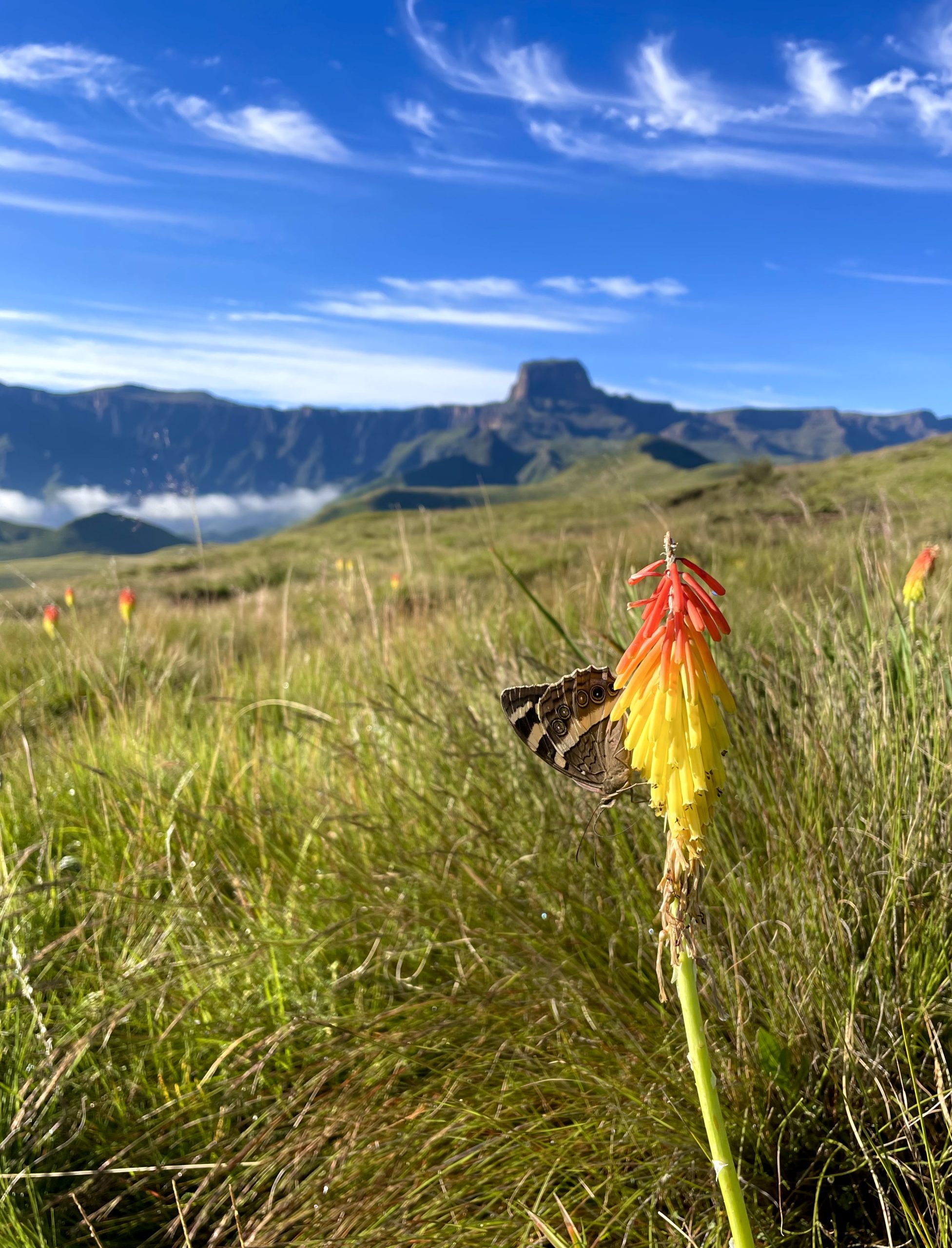
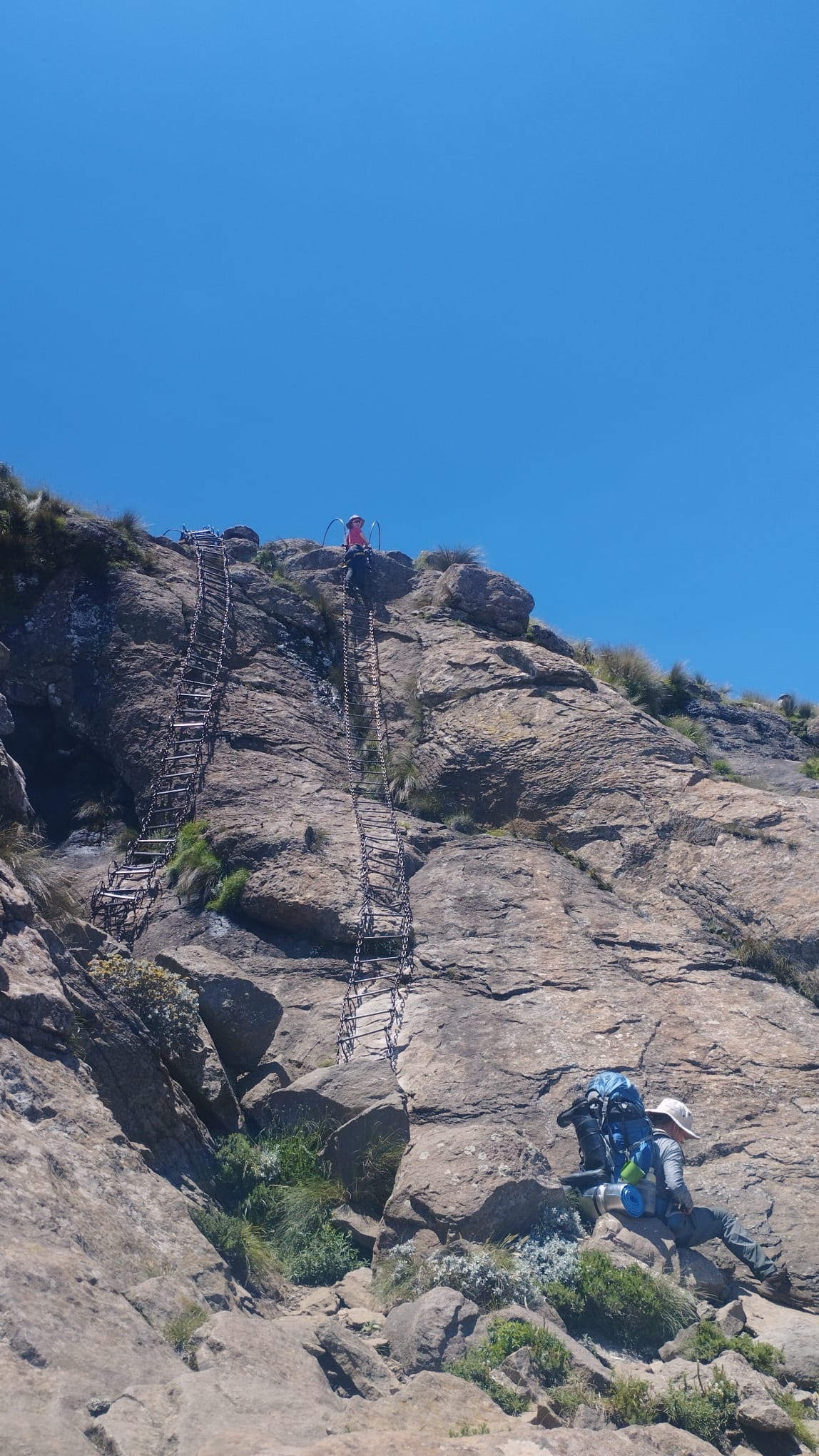
The highlight of the fieldwork for me was the time spent at the highest site, over 3000 m above sea level. We had to hike for about 5 hours, increase 500 m in elevation and climb 60 meters on chain ladders to get to the alpine base. Along the way, I observed a variety of cool plants, insects and birds and even spotted some antelopes and baboons. With no signal or internet, I forgot all about the world beyond the mountain. Herders with their flock stopped by to watch us with our tent, gas analyzer and other strange equipment. They were understandably curious, and so were we. We were also very lucky with the weather, just above the clouds, sunshine every day and we even slept under the stars. Free time was very limited, but one evening we hiked to the boarder to Lesotho and on our way down from the high site we also hiked to one of the highest waterfalls in the world, the Tugela Falls.
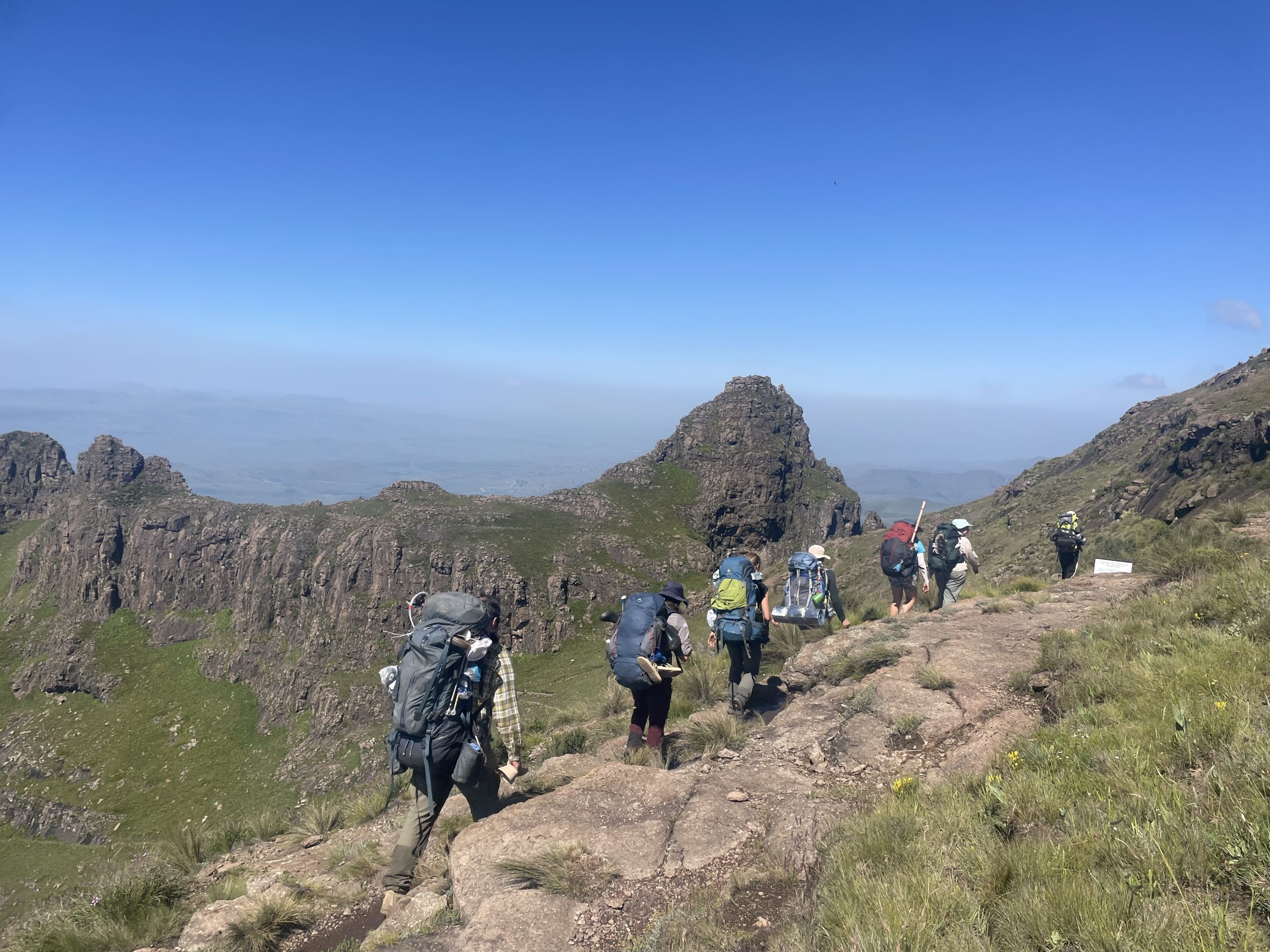
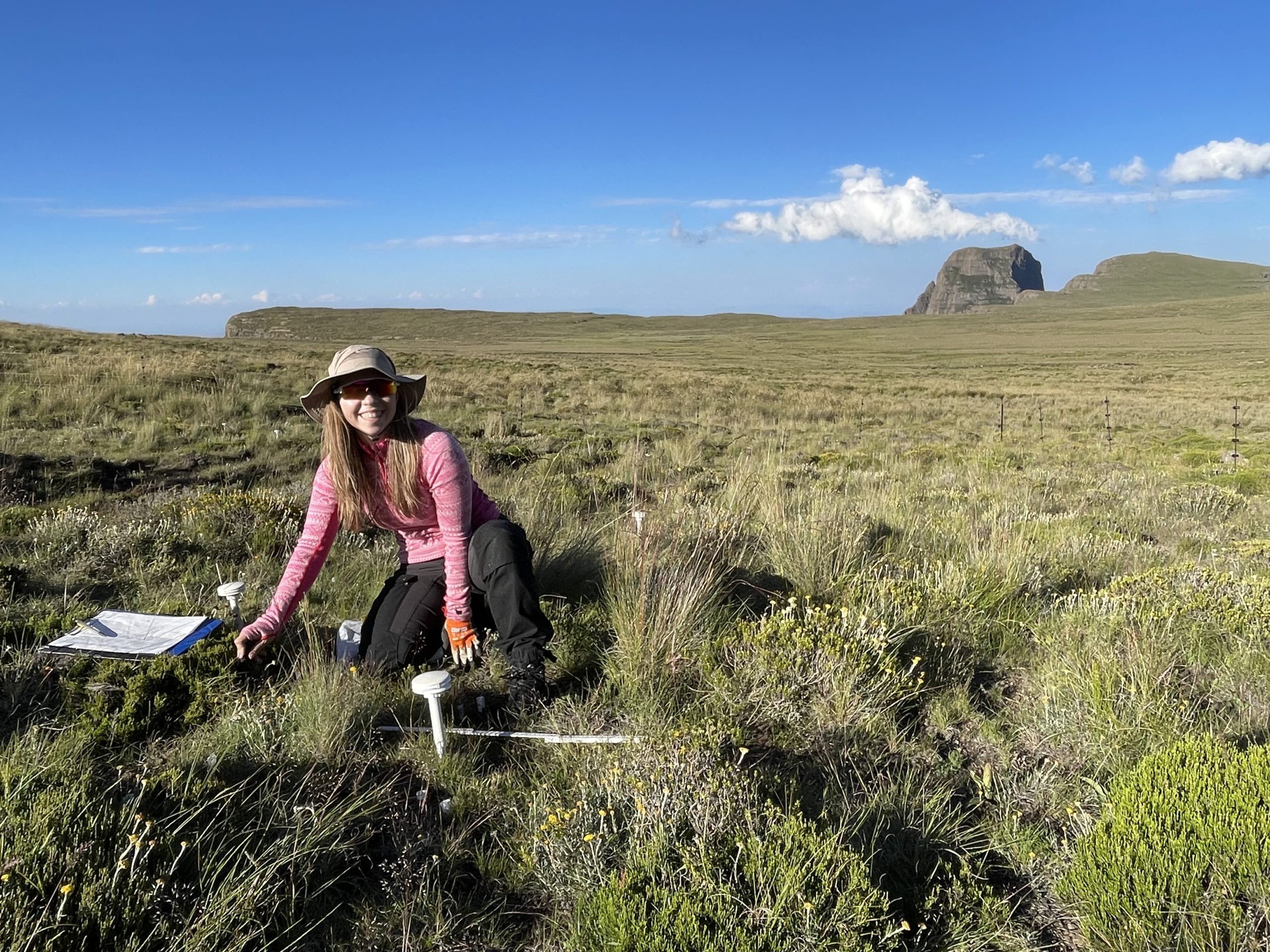
On the last day in the field, the weather was foggy again and we could leave in the same conditions as we arrived, closing the loop but with mixed feelings. Back at the lodge I crashed on the sofa and had the best nap ever. I had been typing in data and preparing code for later analyses most evenings and was only missing the last bit of data entry. So, I woke up from my nap feeling super motivated to finish typing in data and to have a look at the first figures. Later the same evening, the first figures were there, looking fine as well. This would of course not be possible without the fluxible R package, which matches, fits, quality-checks, and plots the fluxes.
The last day at Witsieshoek we wrapped up fieldwork with a casual outreach at the mountain lodge. Guests at the lodge had been watching us and asking questions, so we set up the equipment and some slides and had a nice, engaged last evening at the bar.
Back at home, I was contacted by my previous biology teacher who wanted me to present the fieldwork to her students. So before diving deeper into carbon fluxes, I’ll have to zoom out and start from the very basics (an excellent challenge). Having the skill to communicate what I learn to anyone, no matter their background knowledge, is an important skill I want to gain. With this and other tasks I’ll be bothering my supervisors the next few week before I give them a break while on exchange for the summer semester.